No products in the cart.

Shopping cart (0)
Subtotal: Rs. 0
Spend Rs. 10,000 to get free shipping Congratulations! You've got free shipping.
Blood Pressure Monitors
Shop our wide range of high-quality products from the most trusted health and wellness brands to meet your everyday healthcare necessities.
Product categories
- Adults Diapers 2
- Air Mattresses 2
- Air Quality Solutions 6
- Bandages and Dressings 9
- Blood Glucose Meters 33
- Blood Pressure Monitors 26
- First Aid Kits 1
- Fitness 2
- General Products 2
- Hearing Aids 4
- Heating Pads 13
- Ladies Corner 4
- Light Therapy 3
- Massage Therapy 16
- Men's Corner 40
- Mother and Babycare 7
- Nebulizers 14
- Orthopedic Support 2
- Personal Protection 2
- Pulse Oximeters 4
- Steamers 1
- Stethoscopes 1
- TENS Units 5
- Thermometers 4
- Weight Scales 21
Brands
Sorry, we couldn't find what you're looking for
Filter by price
Show
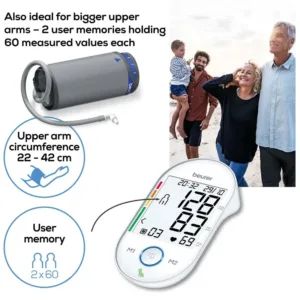
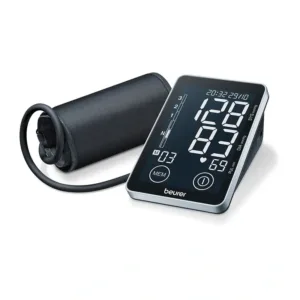
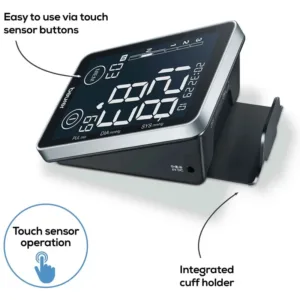
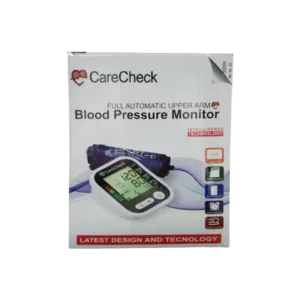
CareCheck Ultra Digital Blood Pressure Monitor
Showing 12 of 26 items
Product categories
- Adults Diapers 2
- Air Mattresses 2
- Air Quality Solutions 6
- Bandages and Dressings 9
- Blood Glucose Meters 33
- Blood Pressure Monitors 26
- First Aid Kits 1
- Fitness 2
- General Products 2
- Hearing Aids 4
- Heating Pads 13
- Ladies Corner 4
- Light Therapy 3
- Massage Therapy 16
- Men's Corner 40
- Mother and Babycare 7
- Nebulizers 14
- Orthopedic Support 2
- Personal Protection 2
- Pulse Oximeters 4
- Steamers 1
- Stethoscopes 1
- TENS Units 5
- Thermometers 4
- Weight Scales 21
Brands
Sorry, we couldn't find what you're looking for
Filter by price
About one in four Pakistani adults has high blood pressure, and roughly seventy percent of them do not know it. Hypertension causes no symptoms until it has already damaged the heart, kidneys, or brain, which is why doctors call it a silent killer. A home blood pressure monitor, known across Pakistan as a BP machine or BP apparatus, is the most practical way to catch the problem early and to check whether medication is actually working.
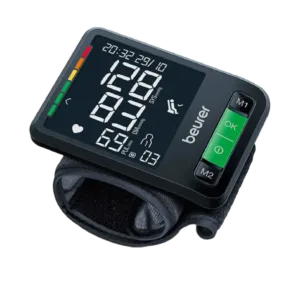
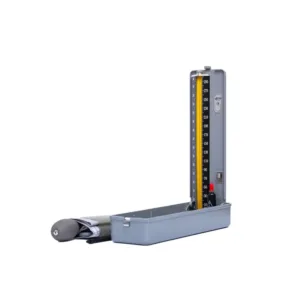
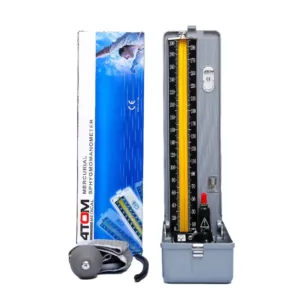
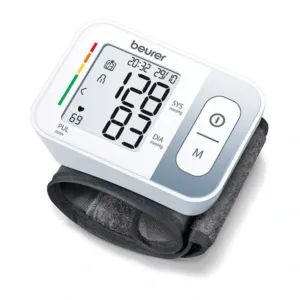
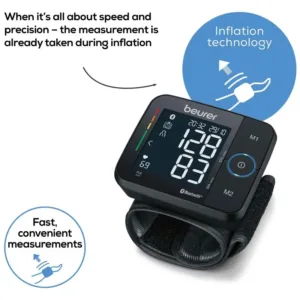
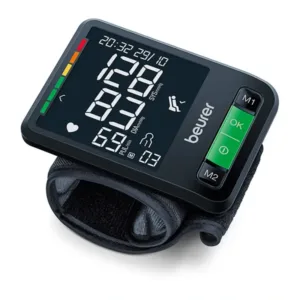
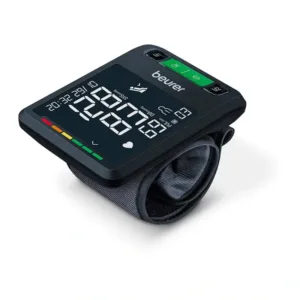
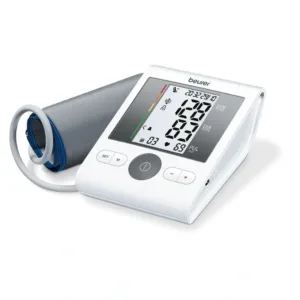
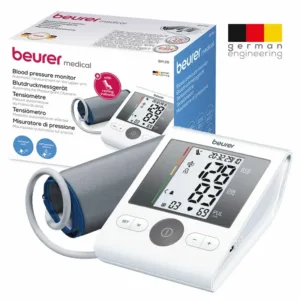
Jarahi stocks blood pressure monitors from Beurer, Certeza, Omron, Citizen, CareCheck, LifeCare, and Atom Medical. The range covers automatic upper arm monitors, wrist monitors, Bluetooth models that log readings to your phone, and the manual aneroid and mercurial sphygmomanometers used in clinics.
Types of Blood Pressure Monitors
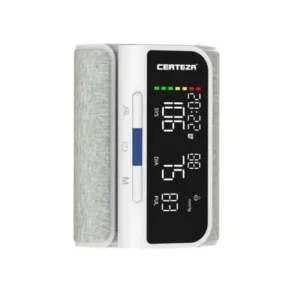
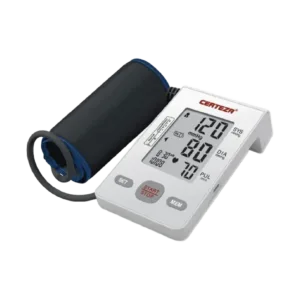
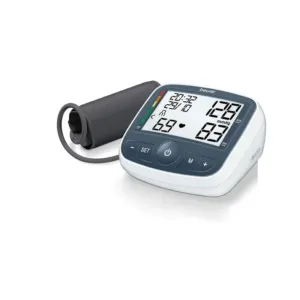
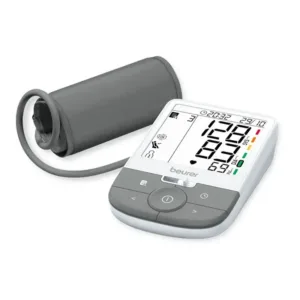
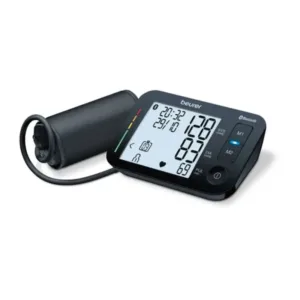
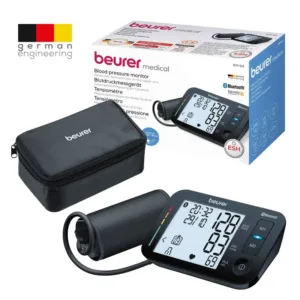
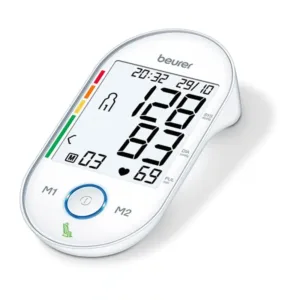
- Automatic Upper Arm Monitors. The cuff wraps around the upper arm and inflates at the press of a button. This is what most doctors recommend for home use because the upper arm sits close to heart level and the reading is less affected by how you hold your body. Beurer BM series, Certeza BM series, Omron M1, Citizen CH series, and CareCheck Ultra all fall into this group.
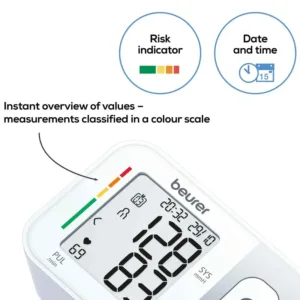
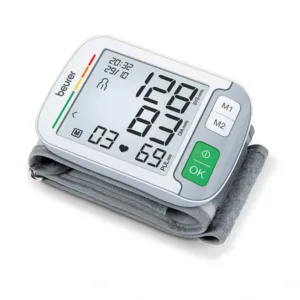
- Wrist Monitors. Smaller, quicker to put on without help, and easier for people who find an arm cuff painful or whose upper arm is too large for a standard cuff. The trade off is sensitivity to position: if the wrist is not held level with the heart, the number moves. Beurer BC series and Certeza BM-307 are the wrist options here.
- Aneroid Sphygmomanometers. Manual devices with a dial gauge, a hand pump, and a stethoscope. No batteries, nothing to charge, and accurate in trained hands, which is why clinics still use them. Certeza CR-1002 and CR-1004 are in this group.
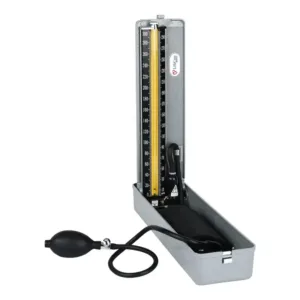
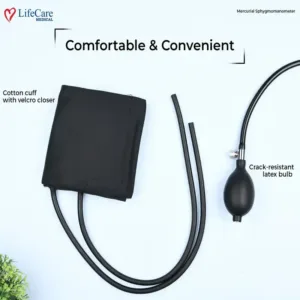
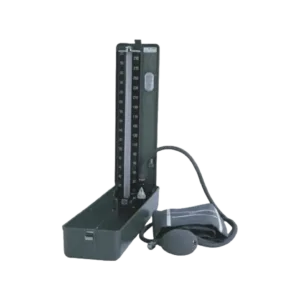
- Mercurial Sphygmomanometers. The traditional glass column instrument, still treated as the accuracy reference in clinical settings. Suited to hospitals, clinics, and medical students rather than home use. LifeCare and Atom Medical supply these.
Upper Arm or Wrist: Which Should You Buy?
For home monitoring, buy an upper arm monitor unless you have a specific reason not to. Arm cuffs are less fussy about posture and are the type used in the studies that produced the blood pressure targets your doctor works from.
A wrist monitor makes sense in three situations: your upper arm is too large for a standard cuff, arthritis or injury makes an arm cuff painful, or you need something small enough to carry to work every day. If you buy one, keep your wrist at heart level for every reading, or the numbers will not be comparable from day to day.
How to Measure Your Blood Pressure Correctly
Most incorrect home readings come from technique, not from the device. Get the routine right and a mid-range monitor will serve you well.
- Sit quietly for five minutes before you start. Do not measure immediately after walking in from outside.
- Avoid tea, coffee, cigarettes, and exercise for at least thirty minutes beforehand.
- Empty your bladder first. A full bladder can add several points to the reading.
- Sit with your back supported and both feet flat on the floor. Do not cross your legs.
- Rest your arm on a table so the cuff sits level with your heart.
- Stay silent during the measurement. Talking raises the reading.
- Take two readings a minute apart and write both down. If they differ a lot, take a third.
- Measure at the same times each day. Morning before medication and evening before dinner is a common pattern.
Understanding Your Reading
Blood pressure is written as two numbers, for example 120/80 mmHg. The first is systolic pressure, the force in the arteries when the heart beats. The second is diastolic pressure, the force between beats.
Doctors in Pakistan generally diagnose hypertension at 140/90 mmHg or above. The 2017 American guidelines use a lower cut off of 130/80 mmHg, which is why you will see different figures quoted online. Neither is wrong, they are different thresholds. A reading above 180/120 mmHg needs urgent medical attention rather than a repeat measurement at home.
Your personal target may not match the general threshold. It can be adjusted if you have diabetes, kidney disease, or are over sixty. One high reading is not a diagnosis. Doctors look at a pattern across days, which is exactly what a home monitor gives them.
Cuff Size Matters More Than People Realise
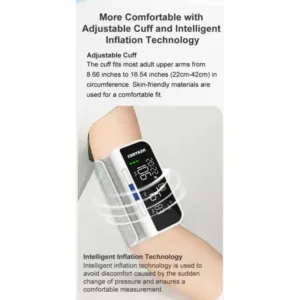
A cuff that is too small squeezes the arm and reports a falsely high reading. One that is too large under reports. This is one of the most common causes of a home monitor disagreeing with the clinic.
Measure around your upper arm at the midpoint between shoulder and elbow, then check that number against the cuff range printed on the box. A standard adult cuff usually covers about 22 to 32 cm. If your arm is bigger, choose a monitor that ships with a wide cuff or accepts one as an accessory.
What to Look For When Buying a BP Machine
- Cuff range. Check it against your actual arm measurement before you buy anything else.
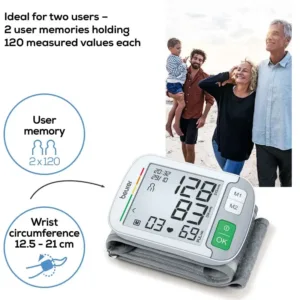
- Memory. Storing past readings saves you writing them down and gives your doctor a trend instead of a single number. Two user memory is useful when a husband and wife share one device.
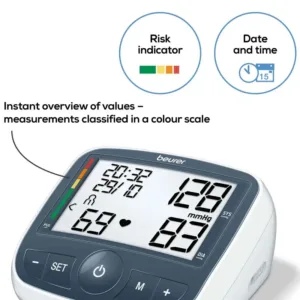
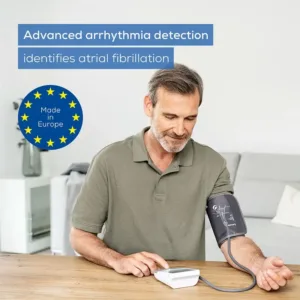
- Irregular heartbeat detection. The monitor flags an uneven pulse during measurement. Worth having if arrhythmia runs in the family.
- Power source. Battery models keep working through load shedding. Rechargeable units such as the Certeza BM-470 avoid the running cost of replacing cells.
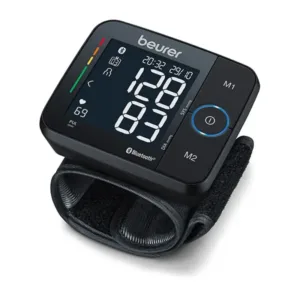
- Bluetooth. Models like the Beurer BC-87 and BC-54 sync readings to a phone app, which makes it easy to send a month of data to a doctor or a family member abroad.
- Display. A large backlit screen matters if the device is for an elderly parent.
Frequently Asked Questions – (FAQs)
Which BP machine is best in Pakistan?
For most households an automatic upper arm monitor is the right answer. Certeza is the most widely used brand in Pakistan and covers the affordable end well. Omron and Beurer are the stronger choices if you want a monitor built to international clinical standards, and Beurer adds Bluetooth models that log readings to a phone. If the device is for a clinic rather than a home, an aneroid or mercurial sphygmomanometer is the appropriate tool.
Is a wrist blood pressure monitor as accurate as an arm one?
A good wrist monitor is accurate, but it is far less forgiving of poor technique. Your wrist has to be at heart level for every single reading, and small changes in posture move the number. Arm monitors are more tolerant, which is why doctors usually recommend them for home use. Choose a wrist model if a standard arm cuff does not fit you or if an arm cuff is painful.
What is a normal blood pressure reading?
Below 120/80 mmHg is considered normal for an adult. In Pakistan, doctors generally diagnose hypertension at 140/90 mmHg or above. Anything over 180/120 mmHg is a medical emergency and needs immediate attention rather than another home reading. Your own target may differ, so follow what your doctor sets for you.
Why is my reading at home different from the reading at the clinic?
Two things usually explain it. The first is white coat effect: blood pressure rises for many people simply because they are in a clinic, so the reading there is often higher than at home. The second is cuff size or technique. A cuff that is too small, an unsupported arm, crossed legs, or talking during the measurement will all push the number up. Take your monitor to your next appointment and compare it against the clinic device.
How often should I check my blood pressure at home?
If you have been diagnosed with hypertension or your doctor has just changed your medication, twice a day is common: once in the morning before taking tablets and once in the evening. Once your pressure is stable, most people can drop to a few times a week. If you have no diagnosis and are simply monitoring, once a week is enough. Follow the schedule your doctor gives you rather than measuring constantly, which tends to cause anxiety without adding useful information.
Which arm should I use?
Measure both arms the first time. Readings often differ slightly between arms, and you should use whichever arm gives the higher number for all future measurements. Stay with that same arm so your readings stay comparable. Mention a large difference between arms to your doctor.
Do digital BP monitors need calibration?
Yes. Accuracy drifts over time, particularly after the device has been knocked or dropped. Most manufacturers suggest checking a home monitor against a clinic device every one to two years. The simplest way to do this is to take your monitor to your next appointment and compare readings taken minutes apart.
Are these blood pressure monitors DRAP registered?
Yes. All medical devices sold on Jarahi are sourced from authorized distributors and comply with DRAP requirements. We do not stock grey market or unregistered devices, which is a real risk with cheap BP machines sold through informal channels.