No products in the cart.

Shopping cart (0)
Subtotal: Rs. 0
Spend Rs. 10,000 to get free shipping Congratulations! You've got free shipping.
Weight Scales
Shop our wide range of high-quality products from the most trusted health and wellness brands to meet your everyday healthcare necessities.
Product categories
- Adults Diapers 2
- Air Mattresses 2
- Air Quality Solutions 6
- Bandages and Dressings 9
- Blood Glucose Meters 33
- Blood Pressure Monitors 26
- First Aid Kits 1
- Fitness 2
- General Products 2
- Hearing Aids 4
- Heating Pads 13
- Ladies Corner 4
- Light Therapy 3
- Massage Therapy 16
- Men's Corner 40
- Mother and Babycare 7
- Nebulizers 14
- Orthopedic Support 2
- Personal Protection 2
- Pulse Oximeters 4
- Steamers 1
- Stethoscopes 1
- TENS Units 5
- Thermometers 4
- Weight Scales 21
Filter by price
Show



Showing 12 of 21 items
Product categories
- Adults Diapers 2
- Air Mattresses 2
- Air Quality Solutions 6
- Bandages and Dressings 9
- Blood Glucose Meters 33
- Blood Pressure Monitors 26
- First Aid Kits 1
- Fitness 2
- General Products 2
- Hearing Aids 4
- Heating Pads 13
- Ladies Corner 4
- Light Therapy 3
- Massage Therapy 16
- Men's Corner 40
- Mother and Babycare 7
- Nebulizers 14
- Orthopedic Support 2
- Personal Protection 2
- Pulse Oximeters 4
- Steamers 1
- Stethoscopes 1
- TENS Units 5
- Thermometers 4
- Weight Scales 21
Filter by price
Almost sixty percent of Pakistani adults are now overweight, and around a quarter meet the definition of obesity. Those figures have roughly tripled in twenty years, and they sit behind much of the country’s diabetes and hypertension burden. A weight machine at home will not fix any of that on its own, but it turns an invisible drift into a number you can actually see and act on.
Jarahi stocks scales from Beurer, Certeza, CareCheck, and LifeCare. The range covers digital bathroom scales, diagnostic scales that estimate body fat and muscle, mechanical dial scales that need no batteries, precision kitchen scales, and baby scales for tracking infant growth at home.
Types of Weight Scales
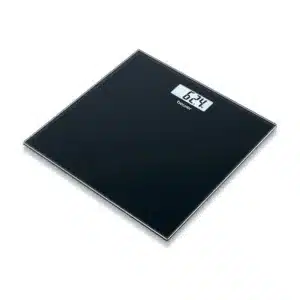
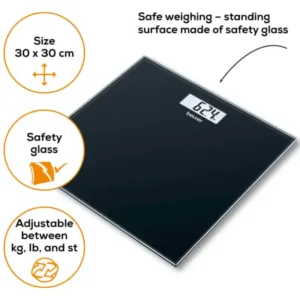
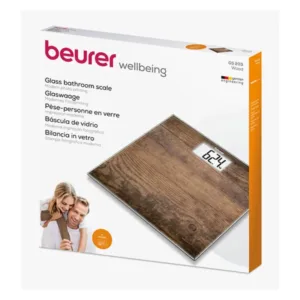
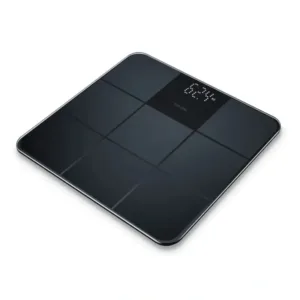
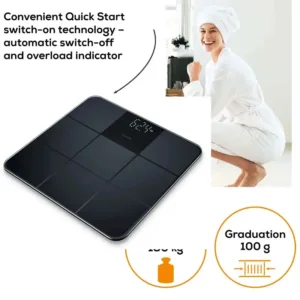
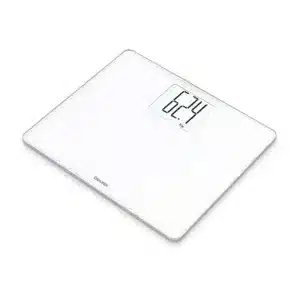
- Digital Bathroom Scales. The standard home weight machine. Step on, read the number. Glass and steel platforms are common. Beurer GS and PS series, Certeza GS-807 and GS-808, and the CareCheck digital scale fall here.
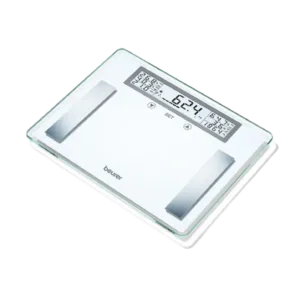
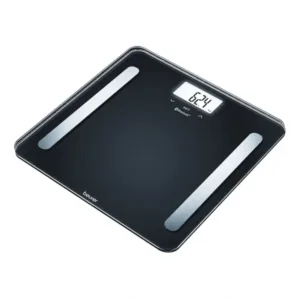
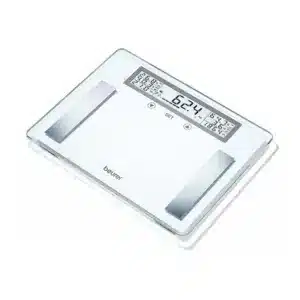
- Diagnostic and Body Composition Scales. These estimate body fat percentage, muscle mass, body water, and bone mass alongside weight. The Beurer BG-51 XXL and the Bluetooth BF-105 are in this group.
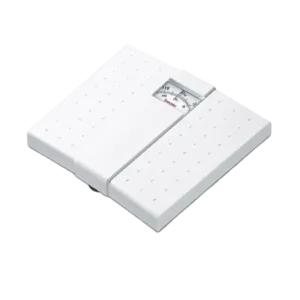
- Mechanical Scales. A dial and a spring, no batteries, nothing to charge. Less precise than digital but they simply keep working. The Beurer MS-01 is the mechanical option here.
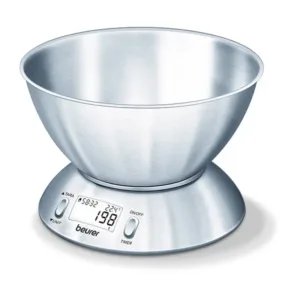
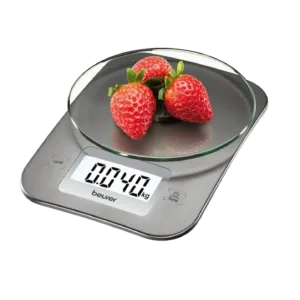
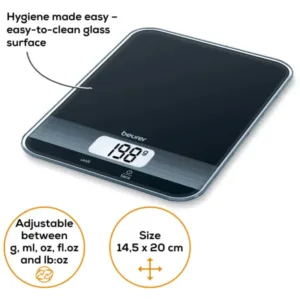
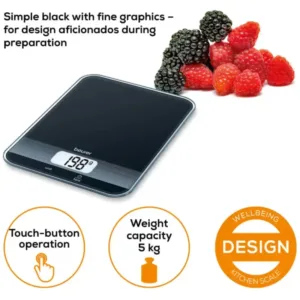
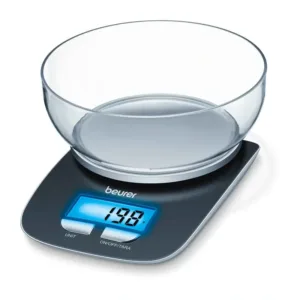
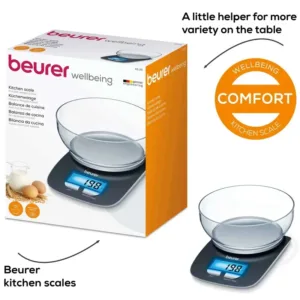
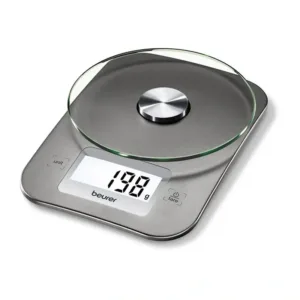
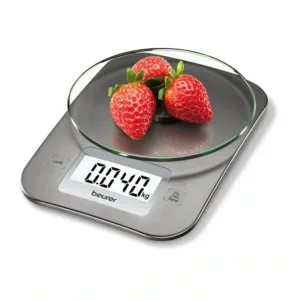
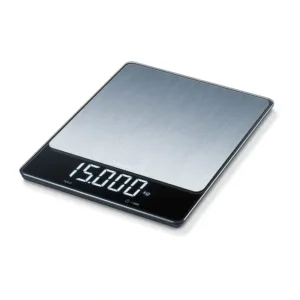
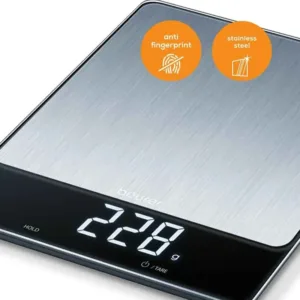
- Kitchen Scales. Measure food in single gram increments. Useful for anyone counting carbohydrates for diabetes, following portion guidance from a doctor, or baking. Beurer KS series.
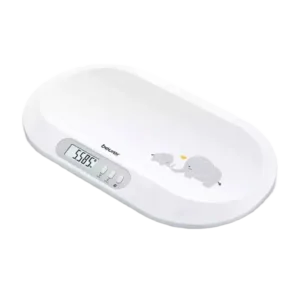
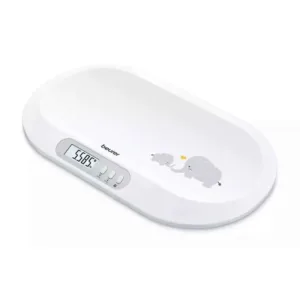
- Baby Scales. Built to weigh an infant who will not sit still, with a hold function that freezes the reading. Beurer BY-90 and the LifeCare baby weight machine.
What a Diagnostic Scale Actually Measures
Body composition scales work by bioelectrical impedance. The scale passes a small, harmless electrical current up through one foot and down the other, then measures how much resistance it meets. Fat resists the current more than muscle and water do, so the scale uses that resistance, along with your height, age, and sex, to estimate what your body is made of.
Worth being clear about the limits. These are estimates, not laboratory measurements. Hydration moves the numbers, so a reading taken after exercise or after a salty meal will differ from one taken first thing in the morning. Treat the trend over weeks as the useful information and ignore the day to day wobble.
Who Should Not Use a Body Composition Scale
- Anyone with a pacemaker or another implanted electronic medical device should not use a bioelectrical impedance scale. Use a standard weight-only scale instead.
- Body composition readings are not reliable during pregnancy. Weight alone is still fine to track.
- If you are unsure whether an implanted device is affected, ask your doctor before using one.
BMI, and Why the Numbers Are Different for Pakistanis
Body Mass Index is your weight in kilograms divided by your height in metres squared. It is a screening tool, not a diagnosis. Most people know the standard thresholds: 25 and above is overweight, 30 and above is obese.
Those thresholds were built on European populations, and they understate risk for South Asians. WHO recommends lower cut off points for Asian populations: 23 and above is overweight, 25 and above is obese. The reason is that South Asians tend to carry more visceral fat, the fat around the internal organs, at any given BMI, which raises the risk of type 2 diabetes and heart disease earlier than the standard numbers suggest.
Practically, this means a Pakistani adult with a BMI of 24 is not in the clear just because a chart printed for a European audience says so. Waist measurement is often more telling than BMI. The commonly used South Asian thresholds are above 90 cm for men and above 80 cm for women.
BMI also cannot tell muscle from fat, so a physically strong person can register as overweight while being perfectly healthy. Use the number as a prompt to talk to a doctor, not as a verdict.
How to Get a Reading You Can Trust
- Put the scale on a hard, flat floor. Carpet compresses under the feet of the scale and throws the reading off, sometimes by several kilograms.
- Weigh yourself at the same time of day. First thing in the morning, after the bathroom and before eating or drinking, is the most consistent point.
- Stand barefoot. Body composition scales need direct skin contact with the electrodes to work at all.
- Stand still with your weight spread evenly across both feet.
- Use the same scale every time. Two scales can disagree by a kilogram and still both be working correctly.
- Expect your weight to move by one to two kilograms across a single day from food, water, and salt. That is normal. The weekly trend is the signal, the daily number is noise.
Choosing a Scale
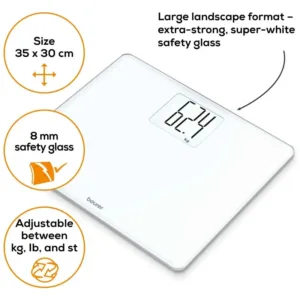
- Capacity. Most home scales handle up to about 150 to 180 kg. XXL models such as the Beurer BG-51 and GS-340 go higher and have a wider platform.
- Platform size. A larger platform is steadier and easier for elderly users, who often feel unsafe on a small one.
- Display. A big backlit readout matters if the scale is for a parent or grandparent, since you cannot bend down to squint at it while standing on it.
- App connection. Bluetooth models such as the Beurer BF-105 log every reading to your phone, which is far more useful than a number you forget an hour later.
- Multiple users. Diagnostic scales usually store profiles for several people, so a family can share one device without mixing up the data.
- Kitchen scales. Look for a tare function, which lets you zero the scale with the bowl already on it, and one gram graduation if you are weighing food for carbohydrate counting.
Frequently Asked Questions – (FAQs)
Which weight machine is best for home use in Pakistan?
For straightforward weight tracking, a digital glass bathroom scale from Certeza or CareCheck does the job at a sensible price. If you want body fat, muscle, and water estimates as well, a Beurer diagnostic scale is the better buy. If the scale is for an elderly relative, prioritise a large platform and a big backlit display over extra features. And if you simply want something that never needs a battery, a mechanical dial scale still works.
Why does my weight change during the day?
Because most of the short term change is water and food, not fat. Eating, drinking, salt intake, and going to the bathroom can move your weight by one to two kilograms within a single day. This is why weighing yourself at the same time each morning matters. Judge progress on a weekly trend, not on the difference between morning and evening.
Are body fat scales accurate?
They are reasonably good at showing change over time and less good at telling you a precise number. Bioelectrical impedance estimates body fat from how much resistance an electrical current meets, and hydration affects that resistance. So the reading can shift after exercise, after a salty meal, or when you are dehydrated. Use the same scale under the same conditions and watch the direction of travel rather than fixating on the exact percentage.
Can I use a body composition scale if I have a pacemaker?
No. Bioelectrical impedance scales pass a small electrical current through the body, and they should not be used by anyone with a pacemaker or another implanted electronic medical device. A standard weight-only scale is completely safe. If you are unsure about your device, ask your doctor.
What BMI is healthy for Pakistanis?
WHO recommends lower thresholds for Asian populations than the familiar international ones. For South Asians, a BMI of 23 and above is treated as overweight and 25 and above as obese, compared with 25 and 30 for European populations. This is because South Asians tend to carry more visceral fat at a given BMI, which raises diabetes and heart disease risk earlier. BMI is only a screening number, so discuss your result with a doctor rather than acting on it alone.
Why does my scale give a different reading on carpet?
The feet of the scale sink into the carpet pile, the load is spread unevenly across the sensors, and the reading drifts. It can be off by several kilograms. Always weigh on a hard, flat surface such as tile or wood, and use the same spot every time.
How do I weigh a baby at home?
Use a proper baby scale with a curved tray and a hold function, which locks the reading even while the baby moves. Weigh the baby undressed, at roughly the same time of day, and record the number. Home weighing helps you track feeding and growth between clinic visits, but it does not replace the growth charts your paediatrician plots. Raise any sudden drop or plateau with your doctor.
Do digital scales need calibration?
Most home scales self calibrate each time you step on them, which is why you should let the display settle before reading it. Accuracy can drift if the scale is dropped or stored in a damp place. A quick check is to weigh a known object, such as a sealed bag of flour or rice, and see whether the scale reports the printed weight.